
Indonesia 2026 Summit Announces Establishment of B57+ Asia-Pacific Regional Headquarters
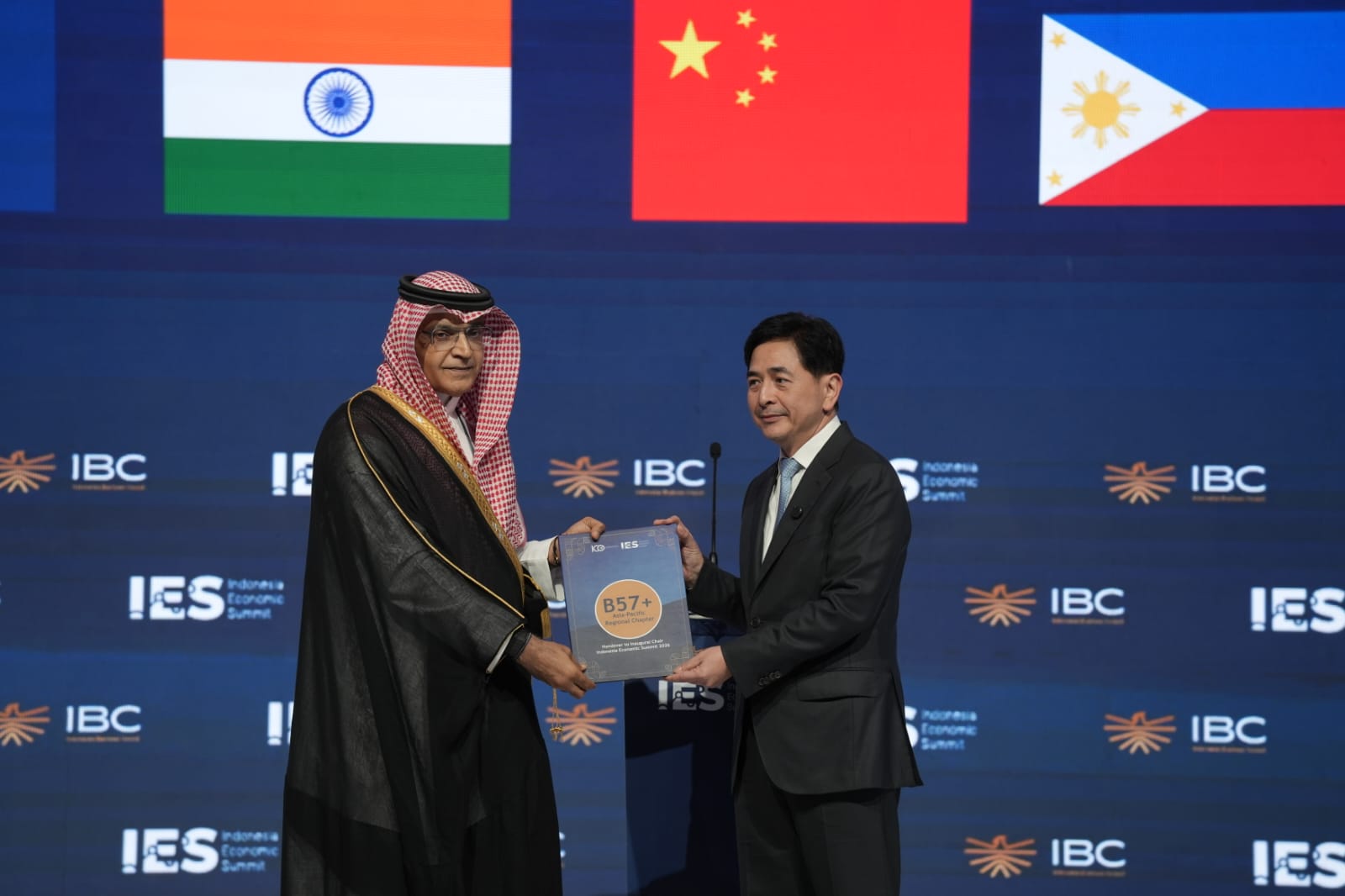
Jakarta —
The Indonesia 2026 Economic Summit witnessed the announcement of the establishment of the B57+ Asia-Pacific Regional Headquarters, marking a significant milestone in the B57+ Business Leaders Initiative.
Launched under the auspices of the Islamic Chamber of Commerce and Development (ICCD), the initiative is a leading private sector-led strategic program aimed at promoting economic integration among Islamic countries and strengthening their connection to the global economy.
Abdullah Saleh Kamel, President of the ICCD and President of the Federation of Saudi Chambers, underscored the strategic importance of the new Asia-Pacific branch. He described it as a pivotal step in expanding the initiative and transforming economic partnerships from coordination frameworks into actionable projects with direct developmental impact.
Kamel explained that the B57+ initiative was created to address a longstanding gap in trade and investment among member states of the Organization of Islamic Cooperation (OIC). Despite a combined population exceeding two billion and vast natural and financial resources, intra-OIC trade currently accounts for only 20-22% of total trade.
He attributed this gap to structural challenges, including divergent regulatory frameworks, fragmented private sector representation, and limited sustainable channels for communication between policymakers and business communities. B57+ seeks to overcome these challenges by establishing a structured and enduring platform for public-private partnerships.
Kamel emphasized that the initiative serves as a bridge between government policies and the practical investment and operational needs of the private sector, translating economic cooperation frameworks into tangible results such as expanded trade, increased cross-border investment, job creation, and shared prosperity.
The B57+ initiative is an inclusive global economic platform extending beyond OIC member states to encompass countries with significant Muslim populations, international centers for Islamic finance and trade, and global institutions aligned with the principles of Islamic economics. The “+” symbol reflects this comprehensive vision, emphasizing the creation of an interconnected economic network that fosters integration among emerging markets while moving beyond short-term interests and geopolitical polarization.
He noted that the initiative marks a qualitative shift in the private sector’s role in the Islamic world, transitioning from mere capitalization on opportunities to actively shaping impact, thereby reinforcing the Islamic economy’s position as a major driver of global growth.
Looking ahead, B57+ is expected to provide a practical framework for harmonizing common economic policies, encouraging cross-border investment, and converting economic agreements into tangible projects, ultimately enhancing the Islamic economy’s presence and influence within the global economic system.